Unicorns have appeared in the myths and legends of numerous ancient cultures. Nowadays they are a universally recognized creature that has become synonymous with rarity. So it seems strange that despite being so widespread, and ultimately being such a simple concept, that unicorns don’t exist. After all, it’s just a horse with a horn. But in reality, the rules of evolution and development forbid unicorns from existing.
17th century woodcut of a unicorn. Image source: University of Houston Libraries
The first issue is a very simple matter of natural selection. Horses typically eat by grazing, and an animal that needs to frequently lower its head to the ground would certainly be inconvenienced by a giant spike on its forehead. The horn would be getting stuck in the ground all the time. Usually ornamental features like this don’t provide much of an advantage except in rare instances for attracting mates, and traits whose costs outweigh their benefits typically aren’t favored by evolution. There are not many circumstances where a horn would be beneficial to a horse’s lifestyle, so such an adaptation like this wouldn’t stick around.
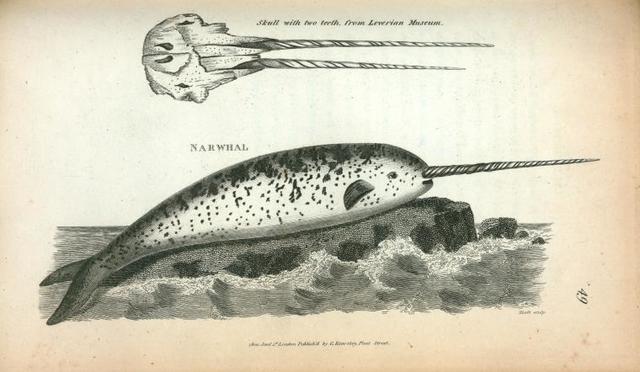
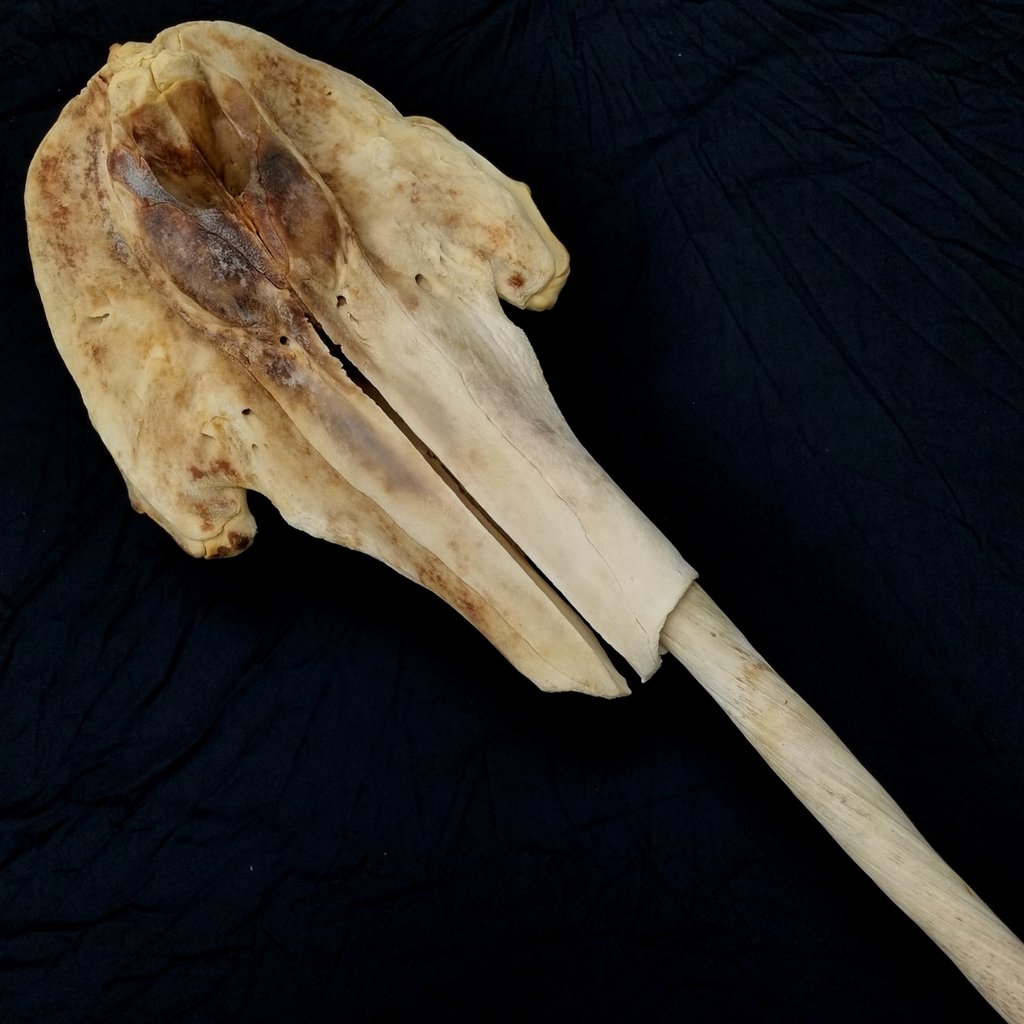
But even if natural selection failed, there are still physical, developmental constraints preventing horses from growing horns. The next rule that unicorns break is the developmental rule of bilateral symmetry. Almost every animal develops their body in such a way that it is perfectly symmetrical along one axis. Sometimes there are exceptions to this where a structure is built on only one side, like the way certain snails’ shells coil or the human heart favoring the left side of the body, but there are never any circumstances where a structure is built directly on the midline, like a unicorn’s horn. At this point many people are probably trying to think of exceptions. One that often comes to mind with unicorns is the narwhal. They are commonly referred to as “the unicorns of the sea.” But narwhal “horns” aren’t horns at all, and are in fact a modified tooth protruding from one side of the face, which is much more apparent looking at a narwhal’s skull. This approach of elongating a tooth probably wouldn’t look as elegant on a horse.
The nose is another structure that seems to be an exception at first glance. Just looking in a mirror, you can tell that it’s directly in the middle of the face. In reality, though, the nose is actually the result of two symmetrical structures on either side of the face coming together and fusing on the midline. This method works for the nose because of the way bones are situated around the front of the face, but the same concept couldn’t be transferred up to the forehead.
So clearly unicorns aren’t meant to exist in nature. But what about mad science? Could we artificially create a unicorn? Maybe. There’s a chemical called bone morphogenic protein, or BMP, that causes bones to develop in embryos. Studies show that applying this protein can cause bone to form in places where it otherwise wouldn’t. So maybe we could use BMP to make a unicorn horn. But this is a bad idea for a few reasons.
First of all, ethics. I think it goes without saying that this would be horribly inhumane and the animal would probably not enjoy it.
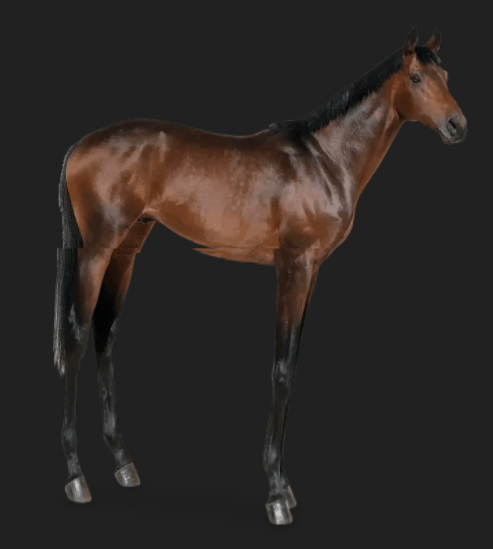
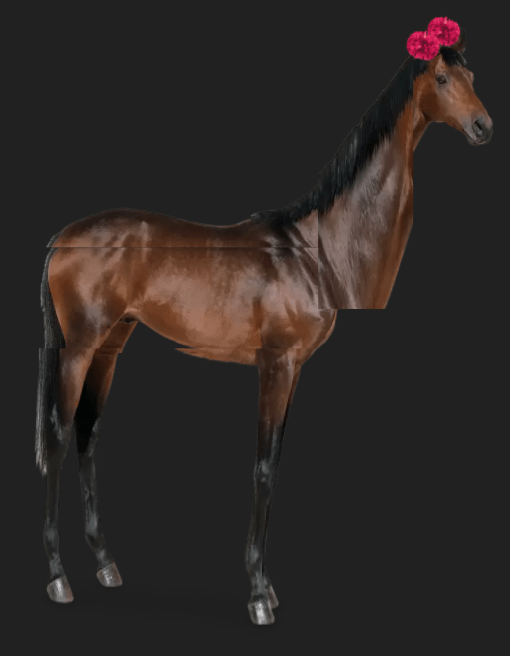
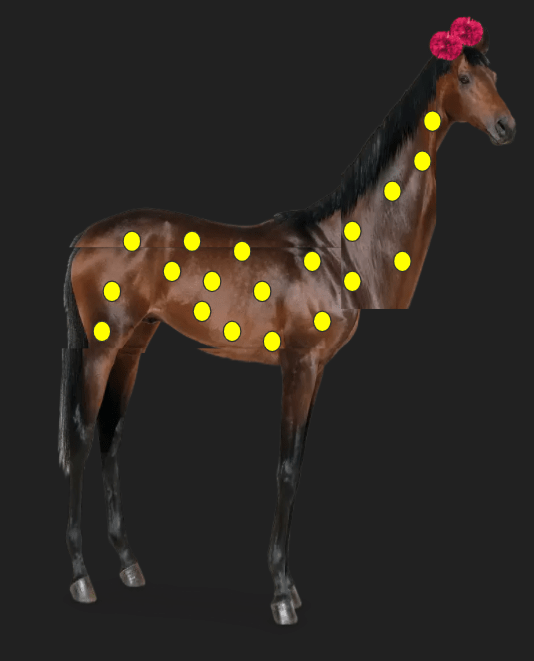
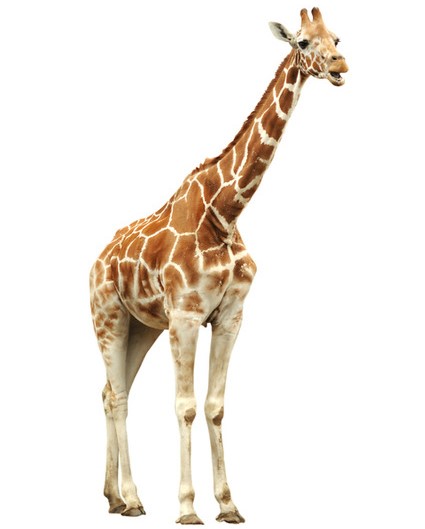
But second of all, and this one might be controversial, unicorns aren’t special. I think that the idea of using a unicorn as the poster child for uniqueness is an absolute injustice. The concept of a horse with a horn is so unbelievably boring and uninspired, especially when there are so many other better options in real life. In contrast, take a horse, put it on stilts, quadruple the length of its neck, attach some pom-poms to its head, and just for fun, paint it with polka dots. What I just described is absolutely insane. If I said any of that out of context you’d think I was a madman, but this thing exists! It’s just a giraffe. And honestly, I tried my best to make my version look bizarre, but the real giraffe is still far stranger. Yet if I showed you a picture of a giraffe right from the beginning, you probably wouldn’t have thought twice about it. My big point here is that when we go searching for unicorns, we end up ignoring the truly remarkable monsters that already live in our world.
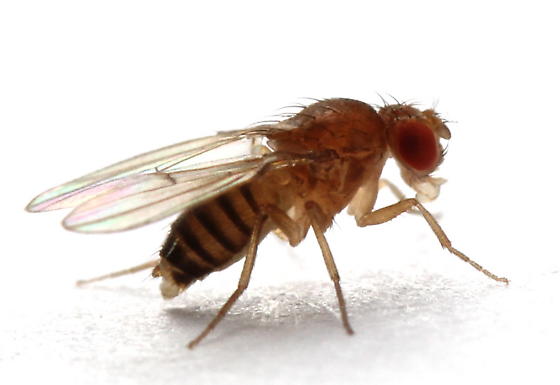
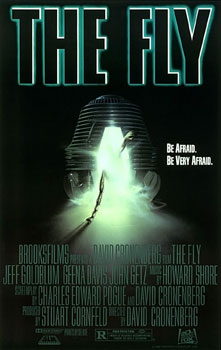
In the 1986 horror movie, “The Fly”, a quantum teleportation accident slowly merges eccentric scientist Dr. Seth Brundle (Jeff Goldblum) and a common house fly together into a being known as “Brundlefly”. Over the course of the movie, Dr. Brundle becomes more grotesque as he concurrently loses his humanity. Since teleportation is not real, we don’t need to worry about the dangers of fly-human hybrids. However, fruit flies are one of the most common animals used in biological experiments, and as a result we know of quite a few very strange mutations. Here are my top 5 coolest fly mutants.
Image credit: Brooksfilms SLM Production Group
5. Hedgehog The hedgehog gene plays a number of important roles in fruit fly development. The gene is very active early in development when the body segments are being organized.1 When the gene is mutated so that it no longer works, the fruit fly embryo develops strange, spiny projections all around its body (hence the name, hedgehog). A version of this gene that is found in vertebrates was subsequently named sonic hedgehog.
4. Tinman The Tinman gene is one of the absolute earliest genes involved in heart development in fruit flies.2 The gene was named after the “Wizard of Oz” character, the Tinman, because when it is mutated, the fruit fly completely fails to develop a heart. Unlike the Wizard of Oz character, flies can’t live without hearts, so this mutation is absolutely lethal.
3. Argos The argos gene plays a role in the development in fruit fly eyes. Specifically, it helps organize which cells should play which roles in the eye. When the argos gene is overactive, it creates a “rough eye” phenotype on the eye, where abnormal bulges begin to form.3
A normal fruit fly eye (left) compared with an argos mutant eye (right). Image credit: Wemmer and Klämbt 1995
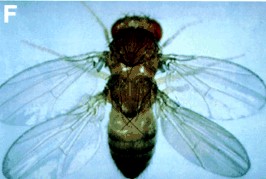
2. Ultrabithorax Your average fruit fly has one set of wings, and right behind them, a set of small structures called halteres that are used for balance during flight. The development of these halteres is controlled largely by a gene called ultrabithorax.4 When this gene is mutated and stops functioning, the fly instead develops the previous segment of its body a second time. This results in a “bithorax fly”, which contains an unusual second entire set of wings.
A mutant ultrabithorax fly, with an entire extra thorax. Image credit: Weatherbee 1998
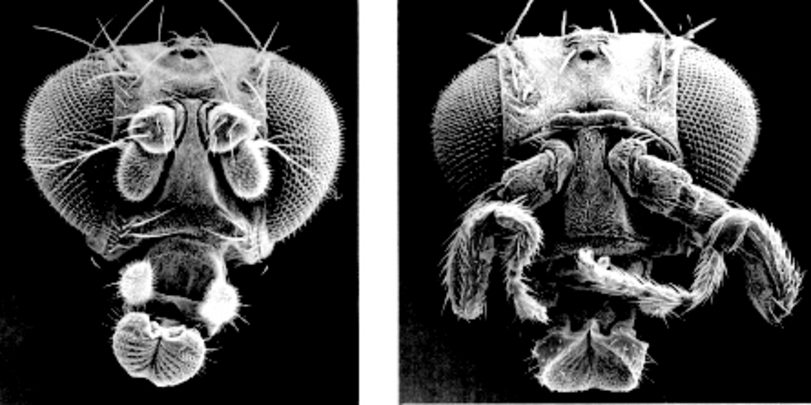
1. Antennapedia The antennapedia gene can do a couple of crazy things. In normal circumstances, this gene controls where the first pair of legs will develop in the fruit fly.5 When the gene is mutated to stop functioning, the previous appendage develops in place of the first legs. This means that the fly will have antennae growing where legs should be. But that’s not even the craziest thing that can be done with antennapedia. If the gene is overexpressed into the head segment, legs will grow in place of antennae! This is one of the coolest examples of real-life science fiction that I can think of, which is why antennapedia lands the #1 spot on this list.
A normal fruit fly (left) and a fly with legs on its head! Image credit: François-Xavier Blaudin de Thé
References:
1. Nüsslein-Volhard, Christiane, and Eric Wieschaus. “Mutations Affecting Segment Number and Polarity in Drosophila.” Nature, vol. 287, no. 5785, 1980, pp. 795–801., doi:10.1038/287795a0.
2. Bodmer, Rolf. “The Gene Tinman Is Required for Specification of the Heart and Visceral Muscles in Drosophila.” Development, vol. 118, no. 3, 1993, pp. 719–729.
3. Wemmer, T, and C Klämbt. “A Genetic Analysis of the Drosophila Closely Linked Interacting Genes Bulge, Argos and Soba.” Genetics, vol. 140, no. 2, 1995, pp. 629–641., doi:10.1093/genetics/140.2.629.
4. Weatherbee, S. D., et al. “Ultrabithorax Regulates Genes at Several Levels of the Wing-Patterning Hierarchy to Shape the Development of the Drosophila Haltere.” Genes & Development, vol. 12, no. 10, 1998, pp. 1474–1482., doi:10.1101/gad.12.10.1474.
5. Schneuwly, Stephan, et al. “Redesigning the Body Plan of Drosophila by Ectopic Expression of the Homoeotic Gene Antennapedia.” Nature, vol. 325, no. 6107, 1987, pp. 816–818., doi:10.1038/325816a0.
Image credit: The Hobbit: The Desolation of Smaug (New Line Cinema)
Dragons have fascinated humans since stories have been told and written records have been kept. What about dragons fascinates us so much? Is it the impossibility of them? Or could it be the possibility of them? After all, dragons have been found in almost every culture; from China to Mesoamerica. I too have been bitten by the dragon bug. Together, let’s dive into the lore and possible science of dragons and other monsters from mythology. In this ongoing series I will discuss and rate the realism of dragons in mythology and pop culture.
Dragons aren’t real (spoiler alert), so we’re going to have to establish some ground rules. First, if a trait has never evolved in real life, then we can assume that it wouldn’t be able to evolve in a realistic dragon. Second, we will also assume that dragons are large predators (unless otherwise explicitly stated in their stories), so traits that are beneficial to large predators in real life will be considered more realistic. Third, because dragons are generally scaled and often compared to lizards, we will assume that they are some kind of reptile. This means that we will treat traits that are commonly found in reptiles as a more realistic feature of a dragon. Because we can’t place dragons in a precise group of reptiles, all options are on the table (squamates, turtles, crocodilians, dinosaurs, and even birds). The final rule is that any type of magic power will be disregarded in terms of realism. If we didn’t consider every dragon with fire breath or wingless flight, it would end up being a pretty boring list. So for now, we’re just going to pretend those powers don’t factor into our consideration. It should also be noted that I won’t be paying as close attention to biophysics. That’s not my area of expertise, and there are already some great resources out there looking into the realism of dragon physics. Now that we’ve got our rules in place, let’s begin.
Smaug (The Hobbit: The Desolation of Smaug):
Smaug the Tetrapod posing atop his hoard of gold. (Image credit: New Line Cinema)
Smaug is one of the most iconic dragons of all time. The original concept from The Hobbit book really set the precedent for the design of all other dragons in modern fiction. The animators for The Hobbit did Smaug justice with a very realistic design, both in terms of graphics quality and anatomy. The first detail that I noticed is that Smaug is accurately a tetrapod, meaning that he has four limbs. Every descendant of the first vertebrates to crawl on land has had four limbs (or fewer, but never more). So when dragons are depicted with four legs AND two wings, that’s a big inaccuracy. I was happy to see that the designers of Smaug combined his forelimbs and wings together into one structure, much like a bird or a bat. This is consistent with how we know wings can develop in other vertebrates in real life.
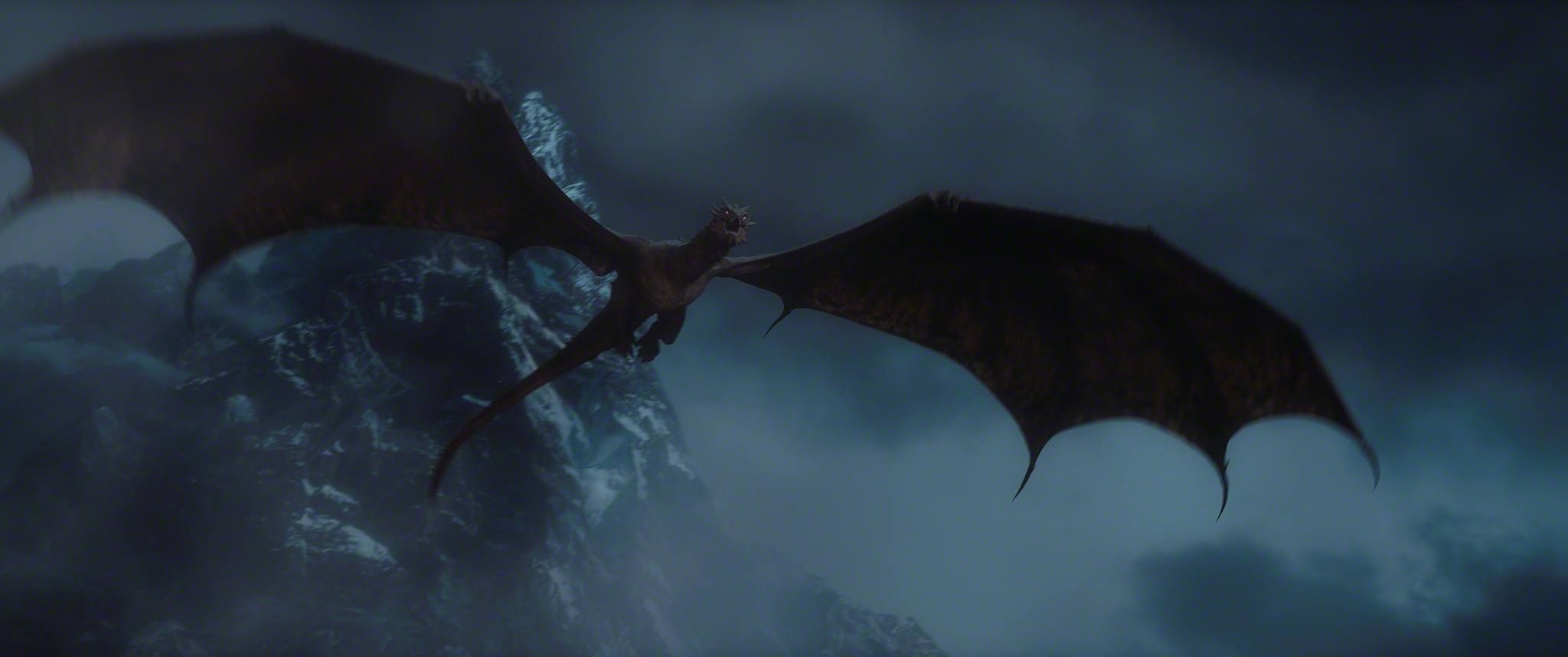
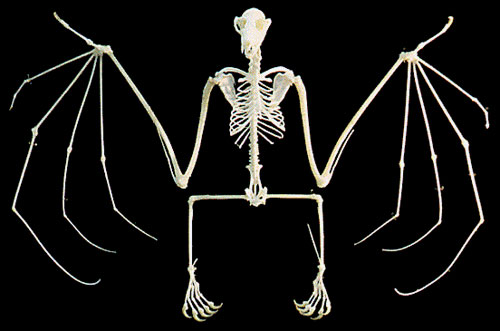
Smaug in flight in comparison with a bat skeleton. (Image credits: New Line Cinema and UC Berkeley)
At first, I was going to take off some points for the wing skin not connecting to anything, but upon closer inspection I realized that the wing skeleton was supported by elongation of three of Smaug’s fingers. This is very similar to how a bat wing is structured, which is a cool detail. However, Smaug’s wing fingers bend above the arm, whereas a bat’s wing fingers bend below the arm. In a bat, this allows the fingers to connect all the way to the leg area, decreasing land mobility but improving flight. Without the skin connecting to the leg, Smaug can walk much easier but his wings probably wouldn’t be strong enough for flight.
An up-close view of Smaug’s fang-like front teeth. (Image credit: New Line Cinema)
Additionally, the designers of Smaug consistently used primarily crocodilian features. When Smaug walks, he pushes himself off the ground with his legs underneath him. This is similar to how crocodiles and alligators walk, rather than how lizards move with their hindlimbs pushing more sideways against the ground. Smaug’s head also has a very crocodilian shape, which was confirmed to be the animators’ intentions in a behind the scenes video. My only complaint with the head is that there seems to be a bit too much tooth specialization. Most animals, with the exception of mammals, only have one kind of teeth. This is specifically true of crocodilians, which have a tooth type called thecodont teeth. In the movie, however, Smaug seems to have some specialized teeth at the front of his mouth that are reminiscent of snake fangs.
As a whole, Smaug is a pretty realistic dragon. Clearly a lot of work went into his design. There are only a few minor details that break the illusion, and they would only be noticed by a trained eye.
I’m not saying that we should do it, all I’m saying is that maybe we could do it. This is obviously just a thought experiment. Legality aside, most of the options I’m going to mention would be highly immoral and probably deadly for the animal. Basically, what I’m saying is don’t try this at home. Now that I’ve got my disclaimer out of the way, let’s get into it.
Image: Dinosaur eggs hatching in Jurassic Park (1993).
The first and most important question here is “Could we make a dinosaur?” The short answer is no, but actually yes. The Jurassic Park movies popularized the idea of cloning dinosaurs, so we can look into that prospect first. In order to clone an organism, the bare minimum requirement is that you have some of its DNA. Prehistoric mosquitos frozen in amber would probably just give you mosquito DNA, so dinosaur fossils would be a better place to look. There have actually been a few attempts to extract DNA from dinosaur fossils, which Paleontologist Jack Horner explains well in his TED talk, but none of them have been successful. One attempt even involved building a portable lab at the fossil dig site, so that the DNA could be extracted as soon as the fossil came in contact with the air. Even this elaborate setup resulted in failure. It seems like cloning a dinosaur wouldn’t be a valid option, so it may be impossible to make a perfect replica of a dinosaur exactly as they lived millions of years ago. However, it might be possible to reverse engineer a dinosaur-like creature using developmental biology and genetics. Let’s walk through the steps.
Because we aren’t building a dinosaur from scratch, we need a starting animal to base everything off of. At this point there is no debate that birds evolved from a dinosaur group called the theropods, which included most of the two-legged dinos like velociraptors and t-rexes. Since birds are the closest living relatives to dinosaurs, we’ll use them as our template. Chickens are often used in developmental biology research, so we’ll stick with chickens for this example, but if you want a bigger, badder dino you could swap the chicken out for something like an ostrich or a cassowary.
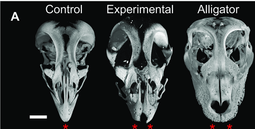
Now that we’ve got our starting material, let’s begin changing it up. The first feature that needs modification is the beak. The distinct shape of a bird beak is made of a material called keratin (the same material as fingernails and hair), but we want the more rounded snout shape of a dinosaur. There have actually been some studies that found a way to do this exact thing. The scientists in this experiment showed that a gene called fgf8 is turned on more than usual in the face/beak area of developing chickens.1 When this gene is experimentally turned off during face development, the chicken instead forms a snout-like feature, more akin to an alligator or a dinosaur. So, in order to give our chicken a snout, all we have to do is turn off the fgf8 gene in the beak area.
The effects of inhibiting the fgf8 gene during snout development: the beak of a chicken (Control) begins to look a lot more like the snout of an alligator. (Bhullar et al. 2015)
We have a functional snout now, but what’s a snout without teeth? The ancestors of modern birds lost their teeth a long time ago (about 100 million years ago), and no birds alive today have teeth.2 Geese have a serrated, tooth-like structure called tomia, but this is made from the same material as the beak. Luckily, scientists have discovered a chicken mutant called Talpid that seems to cause chickens to go back to their ancestral ways of growing teeth.3 The idea of a single mutation changing 100 million years of evolution seems too good to be true, and in a way it is. The Talpid mutation is most likely lethal for the chick, so our experimental dinosaur wouldn’t survive. There are probably a lot of other genes that would need to be changed as well (for example, it seems that restoring enamel to hypothetical bird teeth would be near impossible),4 but this is just a thought experiment so I’m only focusing on the larger structures.
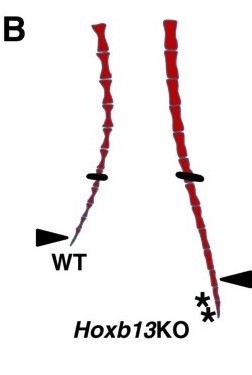
Apart from probably being dead from a lethal tooth mutation, the front side of our dino is starting to look pretty good, so let’s move on to the back. The next feature that we’re going to build is a tail. Ancestral birds lost their tails to help with flight but looking at chicken embryos shows that birds actually develop a full tail, and then completely lose it before hatching.5 This means that we don’t have to build a tail from scratch and instead just have to prevent the tail from being lost. This will take a couple of steps. First, we would need to stop the Hoxb13 gene from being active in the back of the bird. Experiments show that turning this gene off in the tail region causes chickens to keep two more vertebrae than usual. That’s good, but we’ll need about 13 more vertebrae in order to match what many theropod dinosaurs had. Studies have also shown that a chemical called retinoic acid (RA for short) is what causes normal chickens to lose their tails. Blocking this chemical in the embryo would allow the bird to keep its tail after hatching.
The effects of knocking out the Hoxb13 gene (right) in comparison to a normal chicken (left). The experimental chicken has a few more vertebrae in the tail, making it that much more dino-like. (Rashid et al. 2014)
This is a pretty good looking theoretical dinosaur at this point. It’s got a snout, teeth, and a tail. But it feels like something is missing… Scientific consensus at this point is that dinosaurs (or at least the theropods) had feathers.6 And while it would be scientifically accurate to keep the feathers on our theoretical dinosaur, it would also look way cooler if we gave it scales. And this isn’t a perfect dinosaur replica anyways, so why not try to make it look awesome? I’ll at least entertain the idea and look at some ways to make scales. Giving birds scales won’t be nearly as difficult as giving them teeth because unlike teeth, which have been completely gone for millions of years, modern birds still have scales. If you don’t believe me, take a look at a chicken’s feet. In fact, many birds still have scales on their legs. There has been a lot of research into how scales evolved into feathers, but not many experiments have been tested to cause the reverse. Studies show the chemicals β-catenin and retinoic acid (among others) play big roles in turning scales into feathers.7 If the reverse holds true, maybe blocking these chemicals would cause scales to form all over the chicken, instead of just the legs. Then again, biology is rarely that simple, so only time will tell if this is the best way to give our experiment cool looking scales.
And there we have it: a dinosaur (-like creature). Obviously this isn’t a perfect replica, and it wouldn’t take an expert to know something is off. In reality our dino’s appearance would probably horrify people rather than amazing them. But it is a cool thought experiment. To me, the most incredible thing about this is that we can break down the major structural evolution from dinosaurs to birds in a few simple steps.
References: 1. Bhullar, Bhart-Anjan S., et al. “A Molecular Mechanism for the Origin of a Key Evolutionary Innovation, the Bird Beak and Palate, Revealed by an Integrative Approach to Major Transitions in Vertebrate History.” Evolution, vol. 69, no. 7, 2015, pp. 1665–1677., doi:10.1111/evo.12684. 2. Louchart, Antoine, and Laurent Viriot. “From Snout to Beak: the Loss of Teeth in Birds.” Trends in Ecology & Evolution, vol. 26, no. 12, 2011, pp. 663–673., doi:10.1016/j.tree.2011.09.004. 3. Harris, Matthew P., et al. “The Development of Archosaurian First-Generation Teeth in a Chicken Mutant.” Current Biology, vol. 16, no. 4, 2006, pp. 371–377., doi:10.1016/j.cub.2005.12.047. 4. Sire, Jean-Yves, et al. “Hen’s Teeth with Enamel Cap: from Dream to Impossibility.” BMC Evolutionary Biology, vol. 8, no. 1, 2008, p. 246., doi:10.1186/1471-2148-8-246. 5. Rashid, D.J., Chapman, S.C., Larsson, H.C. et al. From dinosaurs to birds: a tail of evolution. EvoDevo 5, 25 (2014). https://doi.org/10.1186/2041-9139-5-25 6. Xu, Xing. “Feathered Dinosaurs from China and the Evolution of Major Avian Characters.” Integrative Zoology, vol. 1, no. 1, 2006, pp. 4–11., doi:10.1111/j.1749-4877.2006.00004.x. 7. Wu, Ping, et al. “Multiple Regulatory Modules Are Required for Scale-to-Feather Conversion.” Molecular Biology and Evolution, vol. 35, no. 2, 2017, pp. 417–430., doi:10.1093/molbev/msx295.
Officially, I study the evolution of development (evo-devo for short). Personally, I would rather consider myself a monster biologist. A standard reaction to a statement like that would be something like “But monsters aren’t real! How could you research something that doesn’t exist?” And my response to that would be “Of course monsters are real! You see them every day!” To prove this point, I’ll propose a thought experiment. Which of the following seems more plausible:
A. A horse with a horn or B. A 20 foot tall spotted horse with a 6 foot long neck and a 21 inch long tongue
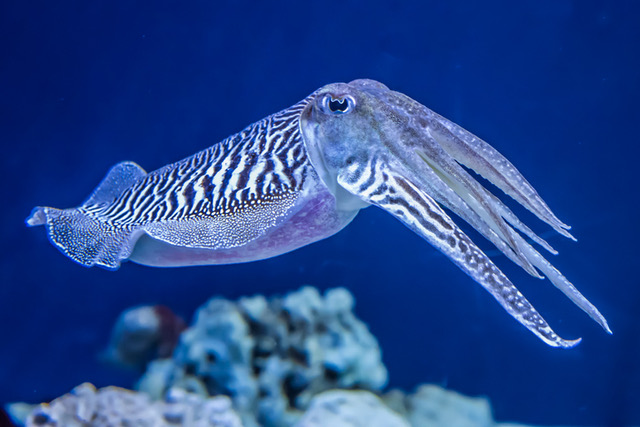
I’m going to guess that most people would pick option A. Strangely enough, the laws of developmental biology forbids unicorns from existing, yet we take for granted the miracle that is a giraffe. With access to the internet, we’ve become so exposed to all types of creatures, that we’re numb to the marvels of the natural world. But go back a few thousand years and the description of a rhinoceros was probably just as awe inspiring as a dragon. History is filled with examples of humans discovering creatures that they had never seen before, and many of the best documented accounts come from European explorations of other continents. Quotes from European explorers in the 1600s and 1700s can be found describing a variety of creatures for the first time in their language, including penguins, bison, and crocodiles. My favorite description, however, is John Fryer’s discovery of my own research organism, the cuttlefish. Upon seeing a cuttlefish for the first time, Fryer portrayed it as a “monstrous figure… all one Lump with the Head, without scales; it was endowed with large Eyes, and had long shreds of Gorgon’s Hair, hung in the manner of Snakes, bestuck with snail-like Shells reaching over the body; under these appeared a Parrot’s Beak, two Slits between the Neck are made instead of Gills for Respiration.” (Fryer 1698) The way that Fryer describes the cuttlefish with elements of other animals reminds me of the ancient Greek myth of the chimera, a monster with the head of a lion, the body of a goat, and a snake for a tail. I think that Fryer’s account perfectly reported how truly strange the form of a cuttlefish is.
I research Cephalopods (octopus, squid, and relatives) because I think that they are some of the most fascinating monsters that the world has to offer. There are so many stories to be discovered from these ancient, aquatic invertebrates. They’ve evolved suckered arms and tentacles, camera-like eyes, the ability to change color and texture, jet propulsion, and advanced intelligence, yet they descended from the same common ancestor as slugs and snails. The alien-like nature of Cephalopods inspired the incomprehensible horrors of H.P. Lovecraft and the brain-eating Illithids of Gary Gygax. For me, the opportunity to study such incredible creatures is like living out a childhood dream. Myths and stories make it clear that humans have always been captivated by monsters. The diverse array of concepts for fantastic creatures in folklore bring new meaning to Darwin’s idea of “endless forms most beautiful”. (Darwin 2004) Many of these stories go about explaining the origin of certain animals, like how a turtle got its shell. In essence, that is the same job as a developmental biologist. I look at animals and ask “How did this happen?” Whereas Aesop of ancient Greece might explain a turtle shell by saying the Greek god Hermes cursed it to carry its home everywhere it goes, Dr. Scott Gilbert of Swarthmore College would say the turtle’s shoulders moved inside its rib cage during development (Gilbert 2001). I would argue that both explanations are equally interesting. When most people think of developmental biology, I would guess they picture a scientist hunched over a microscope, performing lonely and tedious work. This image makes me sad, because it takes the story out of the research. The story isn’t the fact that “snakes are missing a 17 base pair section of the ETS1 transcription factor.” (Kvon et al 2016) The story is answering the question of “how snakes lost their limbs.” The fun of developmental biology is in discovering answers to these types of questions. My experience as a developmental biologist has helped me see all organisms through a different lens, but you don’t have to be a biologist to appreciate the creatures living in the world around you. All you have to do is ask questions. Next time you see Spanish moss hanging from a tree, ask yourself how a plant can live without roots or leaves. Or when you see an armadillo on the side of the road, ask yourself how a mammal got an armored shell. All it takes is a little extra thought, and you too can live in a world full of monsters.
Works cited: – Darwin, Charles. The Origin of Species. Barnes & Noble Classics, 2004. – Fryer, John. “A New Account of East-India and Persia, in Eight Letters Being Nine Years Travels Begun 1672 and Finished 1681.” R.R. for Ri. Chiswell, 1698. – Gilbert, Scott F., et al. “Morphogenesis of the Turtle Shell: the Development of a Novel Structure in Tetrapod Evolution.” Evolution and Development, vol. 3, no. 2, 2001, pp. 47–58., doi:10.1046/j.1525-142x.2001.003002047.x. – Kvon, Evgeny Z., et al. “Progressive Loss of Function in a Limb Enhancer During Snake Evolution.” Cell, 2016. doi:10.1016/j.cell.2016.09.028.








 Monster Biology