The Possibility of a Dragon: Smaug

Image credit: The Hobbit: The Desolation of Smaug (New Line Cinema)

              Dragons have fascinated humans since stories have been told and written records have been kept. What about dragons fascinates us so much? Is it the impossibility of them? Or could it be the possibility of them? After all, dragons have been found in almost every culture; from China to Mesoamerica. I too have been bitten by the dragon bug. Together, let’s dive into the lore and possible science of dragons and other monsters from mythology. In this ongoing series I will discuss and rate the realism of dragons in mythology and pop culture.

               Dragons aren’t real (spoiler alert), so we’re going to have to establish some ground rules. First, if a trait has never evolved in real life, then we can assume that it wouldn’t be able to evolve in a realistic dragon. Second, we will also assume that dragons are large predators (unless otherwise explicitly stated in their stories), so traits that are beneficial to large predators in real life will be considered more realistic. Third, because dragons are generally scaled and often compared to lizards, we will assume that they are some kind of reptile. This means that we will treat traits that are commonly found in reptiles as a more realistic feature of a dragon. Because we can’t place dragons in a precise group of reptiles, all options are on the table (squamates, turtles, crocodilians, dinosaurs, and even birds). The final rule is that any type of magic power will be disregarded in terms of realism. If we didn’t consider every dragon with fire breath or wingless flight, it would end up being a pretty boring list. So for now, we’re just going to pretend those powers don’t factor into our consideration. It should also be noted that I won’t be paying as close attention to biophysics. That’s not my area of expertise, and there are already some great resources out there looking into the realism of dragon physics. Now that we’ve got our rules in place, let’s begin.

Smaug (The Hobbit: The Desolation of Smaug):

Smaug the Tetrapod posing atop his hoard of gold. (Image credit: New Line Cinema)

               Smaug is one of the most iconic dragons of all time. The original concept from The Hobbit book really set the precedent for the design of all other dragons in modern fiction. The animators for The Hobbit did Smaug justice with a very realistic design, both in terms of graphics quality and anatomy. The first detail that I noticed is that Smaug is accurately a tetrapod, meaning that he has four limbs. Every descendant of the first vertebrates to crawl on land has had four limbs (or fewer, but never more). So when dragons are depicted with four legs AND two wings, that’s a big inaccuracy. I was happy to see that the designers of Smaug combined his forelimbs and wings together into one structure, much like a bird or a bat. This is consistent with how we know wings can develop in other vertebrates in real life.
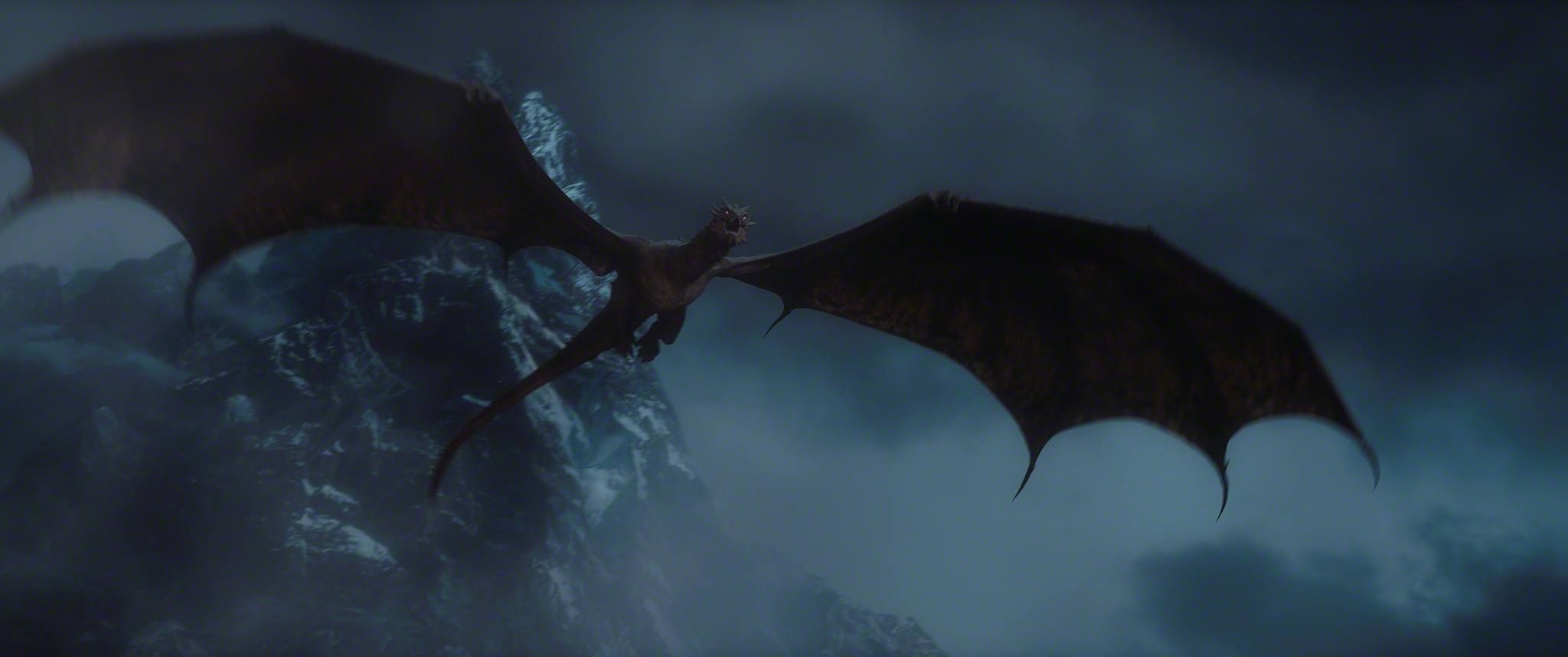
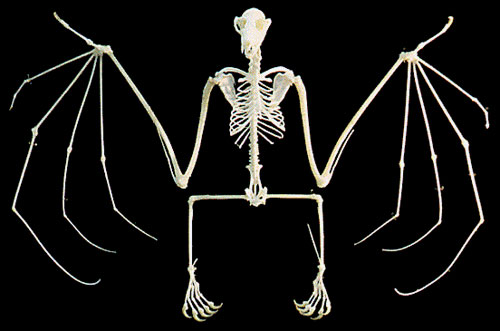
Smaug in flight in comparison with a bat skeleton. (Image credits: New Line Cinema and UC Berkeley)

               At first, I was going to take off some points for the wing skin not connecting to anything, but upon closer inspection I realized that the wing skeleton was supported by elongation of three of Smaug’s fingers. This is very similar to how a bat wing is structured, which is a cool detail. However, Smaug’s wing fingers bend above the arm, whereas a bat’s wing fingers bend below the arm. In a bat, this allows the fingers to connect all the way to the leg area, decreasing land mobility but improving flight. Without the skin connecting to the leg, Smaug can walk much easier but his wings probably wouldn’t be strong enough for flight.

An up-close view of Smaug’s fang-like front teeth. (Image credit: New Line Cinema)

               Additionally, the designers of Smaug consistently used primarily crocodilian features. When Smaug walks, he pushes himself off the ground with his legs underneath him. This is similar to how crocodiles and alligators walk, rather than how lizards move with their hindlimbs pushing more sideways against the ground. Smaug’s head also has a very crocodilian shape, which was confirmed to be the animators’ intentions in a behind the scenes video. My only complaint with the head is that there seems to be a bit too much tooth specialization.  Most animals, with the exception of mammals, only have one kind of teeth. This is specifically true of crocodilians, which have a tooth type called thecodont teeth. In the movie, however, Smaug seems to have some specialized teeth at the front of his mouth that are reminiscent of snake fangs.

              As a whole, Smaug is a pretty realistic dragon. Clearly a lot of work went into his design. There are only a few minor details that break the illusion, and they would only be noticed by a trained eye.

Overall “realism” rating: 3.5/5

An Introduction to Monster Biology

Officially, I study the evolution of development (evo-devo for short). Personally, I would rather consider myself a monster biologist. A standard reaction to a statement like that would be something like “But monsters aren’t real! How could you research something that doesn’t exist?” And my response to that would be “Of course monsters are real! You see them every day!” To prove this point, I’ll propose a thought experiment. Which of the following seems more plausible:

A. A horse with a horn or
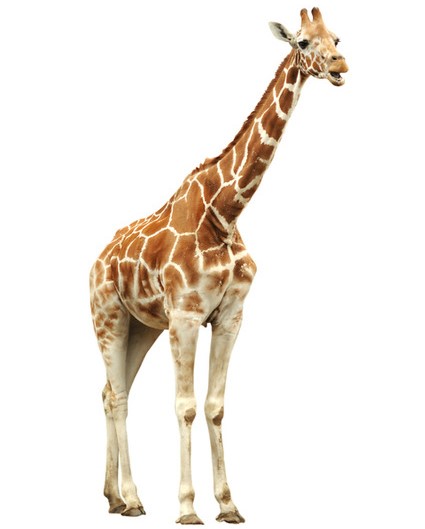
B. A 20 foot tall spotted horse with a 6 foot long neck and a 21 inch long tongue

I’m going to guess that most people would pick option A. Strangely enough, the laws of developmental biology forbids unicorns from existing, yet we take for granted the miracle that is a giraffe. With access to the internet, we’ve become so exposed to all types of creatures, that we’re numb to the marvels of the natural world. But go back a few thousand years and the description of a rhinoceros was probably just as awe inspiring as a dragon.
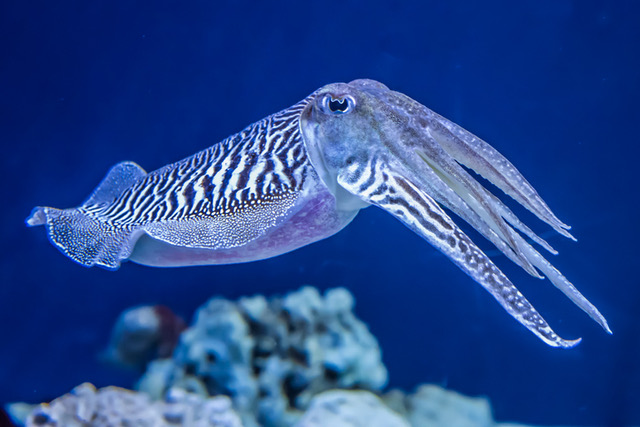
History is filled with examples of humans discovering creatures that they had never seen before, and many of the best documented accounts come from European explorations of other continents. Quotes from European explorers in the 1600s and 1700s can be found describing a variety of creatures for the first time in their language, including penguins, bison, and crocodiles. My favorite description, however, is John Fryer’s discovery of my own research organism, the cuttlefish. Upon seeing a cuttlefish for the first time, Fryer portrayed it as a “monstrous figure… all one Lump with the Head, without scales; it was endowed with large Eyes, and had long shreds of Gorgon’s Hair, hung in the manner of Snakes, bestuck with snail-like Shells reaching over the body; under these appeared a Parrot’s Beak, two Slits between the Neck are made instead of Gills for Respiration.” (Fryer 1698) The way that Fryer describes the cuttlefish with elements of other animals reminds me of the ancient Greek myth of the chimera, a monster with the head of a lion, the body of a goat, and a snake for a tail. I think that Fryer’s account perfectly reported how truly strange the form of a cuttlefish is.


I research Cephalopods (octopus, squid, and relatives) because I think that they are some of the most fascinating monsters that the world has to offer. There are so many stories to be discovered from these ancient, aquatic invertebrates. They’ve evolved suckered arms and tentacles, camera-like eyes, the ability to change color and texture, jet propulsion, and advanced intelligence, yet they descended from the same common ancestor as slugs and snails. The alien-like nature of Cephalopods inspired the incomprehensible horrors of H.P. Lovecraft and the brain-eating Illithids of Gary Gygax. For me, the opportunity to study such incredible creatures is like living out a childhood dream.
Myths and stories make it clear that humans have always been captivated by monsters. The diverse array of concepts for fantastic creatures in folklore bring new meaning to Darwin’s idea of “endless forms most beautiful”. (Darwin 2004) Many of these stories go about explaining the origin of certain animals, like how a turtle got its shell. In essence, that is the same job as a developmental biologist. I look at animals and ask “How did this happen?” Whereas Aesop of ancient Greece might explain a turtle shell by saying the Greek god Hermes cursed it to carry its home everywhere it goes, Dr. Scott Gilbert of Swarthmore College would say the turtle’s shoulders moved inside its rib cage during development (Gilbert 2001). I would argue that both explanations are equally interesting.
When most people think of developmental biology, I would guess they picture a scientist hunched over a microscope, performing lonely and tedious work. This image makes me sad, because it takes the story out of the research. The story isn’t the fact that “snakes are missing a 17 base pair section of the ETS1 transcription factor.” (Kvon et al 2016) The story is answering the question of “how snakes lost their limbs.” The fun of developmental biology is in discovering answers to these types of questions.
My experience as a developmental biologist has helped me see all organisms through a different lens, but you don’t have to be a biologist to appreciate the creatures living in the world around you. All you have to do is ask questions. Next time you see Spanish moss hanging from a tree, ask yourself how a plant can live without roots or leaves. Or when you see an armadillo on the side of the road, ask yourself how a mammal got an armored shell. All it takes is a little extra thought, and you too can live in a world full of monsters.

Works cited:
– Darwin, Charles. The Origin of Species. Barnes & Noble Classics, 2004.
– Fryer, John. “A New Account of East-India and Persia, in Eight Letters Being Nine Years Travels Begun 1672 and Finished 1681.” R.R. for Ri. Chiswell, 1698.
– Gilbert, Scott F., et al. “Morphogenesis of the Turtle Shell: the Development of a Novel Structure in Tetrapod Evolution.” Evolution and Development, vol. 3, no. 2, 2001, pp. 47–58., doi:10.1046/j.1525-142x.2001.003002047.x.
– Kvon, Evgeny Z., et al. “Progressive Loss of Function in a Limb Enhancer During Snake Evolution.” Cell, 2016. doi:10.1016/j.cell.2016.09.028.