Monster Flies: Strange Tales of Mutation

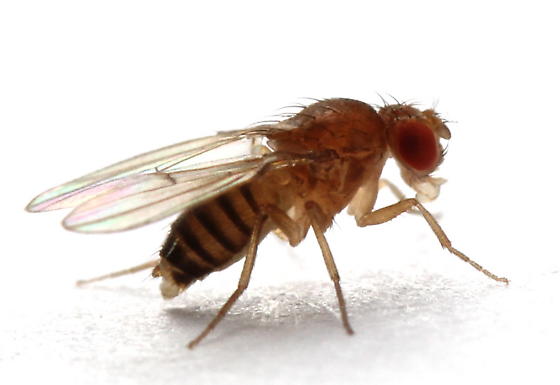
In the 1986 horror movie, “The Fly”, a quantum teleportation accident slowly merges eccentric scientist Dr. Seth Brundle (Jeff Goldblum) and a common house fly together into a being known as “Brundlefly”. Over the course of the movie, Dr. Brundle becomes more grotesque as he concurrently loses his humanity. Since teleportation is not real, we don’t need to worry about the dangers of fly-human hybrids. However, fruit flies are one of the most common animals used in biological experiments, and as a result we know of quite a few very strange mutations. Here are my top 5 coolest fly mutants.

Image credit: Brooksfilms SLM Production Group

5. Hedgehog
The hedgehog gene plays a number of important roles in fruit fly development. The gene is very active early in development when the body segments are being organized.1 When the gene is mutated so that it no longer works, the fruit fly embryo develops strange, spiny projections all around its body (hence the name, hedgehog). A version of this gene that is found in vertebrates was subsequently named sonic hedgehog.

4. Tinman
The Tinman gene is one of the absolute earliest genes involved in heart development in fruit flies.2 The gene was named after the “Wizard of Oz” character, the Tinman, because when it is mutated, the fruit fly completely fails to develop a heart. Unlike the Wizard of Oz character, flies can’t live without hearts, so this mutation is absolutely lethal.

3. Argos
The argos gene plays a role in the development in fruit fly eyes. Specifically, it helps organize which cells should play which roles in the eye. When the argos gene is overactive, it creates a “rough eye” phenotype on the eye, where abnormal bulges begin to form.3

A normal fruit fly eye (left) compared with an argos mutant eye (right). Image credit: Wemmer and Klämbt 1995

2. Ultrabithorax
Your average fruit fly has one set of wings, and right behind them, a set of small structures called halteres that are used for balance during flight. The development of these halteres is controlled largely by a gene called ultrabithorax.4 When this gene is mutated and stops functioning, the fly instead develops the previous segment of its body a second time. This results in a “bithorax fly”, which contains an unusual second entire set of wings.
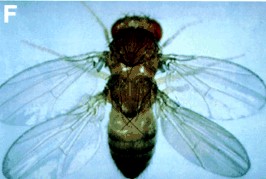
A mutant ultrabithorax fly, with an entire extra thorax. Image credit: Weatherbee 1998

1. Antennapedia
The antennapedia gene can do a couple of crazy things. In normal circumstances, this gene controls where the first pair of legs will develop in the fruit fly.5 When the gene is mutated to stop functioning, the previous appendage develops in place of the first legs. This means that the fly will have antennae growing where legs should be. But that’s not even the craziest thing that can be done with antennapedia. If the gene is overexpressed into the head segment, legs will grow in place of antennae! This is one of the coolest examples of real-life science fiction that I can think of, which is why antennapedia lands the #1 spot on this list.
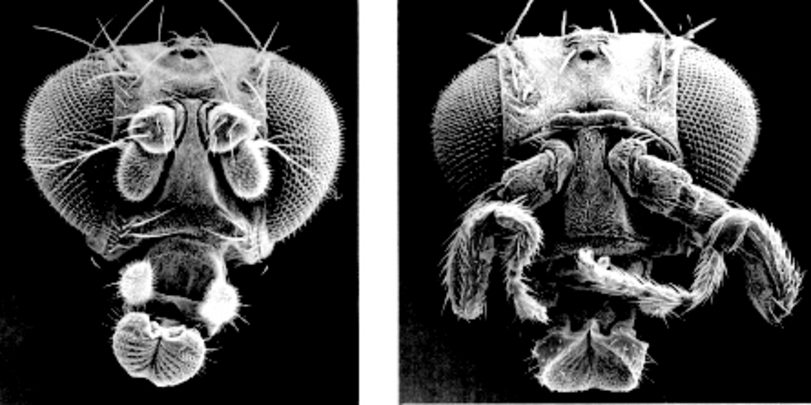
A normal fruit fly (left) and a fly with legs on its head! Image credit: François-Xavier Blaudin de Thé

References:

1. Nüsslein-Volhard, Christiane, and Eric Wieschaus. “Mutations Affecting Segment Number and Polarity in Drosophila.” Nature, vol. 287, no. 5785, 1980, pp. 795–801., doi:10.1038/287795a0.

2. Bodmer, Rolf. “The Gene Tinman Is Required for Specification of the Heart and Visceral Muscles in Drosophila.” Development, vol. 118, no. 3, 1993, pp. 719–729.

3. Wemmer, T, and C Klämbt. “A Genetic Analysis of the Drosophila Closely Linked Interacting Genes Bulge, Argos and Soba.” Genetics, vol. 140, no. 2, 1995, pp. 629–641., doi:10.1093/genetics/140.2.629.

4. Weatherbee, S. D., et al. “Ultrabithorax Regulates Genes at Several Levels of the Wing-Patterning Hierarchy to Shape the Development of the Drosophila Haltere.” Genes & Development, vol. 12, no. 10, 1998, pp. 1474–1482., doi:10.1101/gad.12.10.1474.

5. Schneuwly, Stephan, et al. “Redesigning the Body Plan of Drosophila by Ectopic Expression of the Homoeotic Gene Antennapedia.” Nature, vol. 325, no. 6107, 1987, pp. 816–818., doi:10.1038/325816a0.

An Introduction to Monster Biology

Officially, I study the evolution of development (evo-devo for short). Personally, I would rather consider myself a monster biologist. A standard reaction to a statement like that would be something like “But monsters aren’t real! How could you research something that doesn’t exist?” And my response to that would be “Of course monsters are real! You see them every day!” To prove this point, I’ll propose a thought experiment. Which of the following seems more plausible:

A. A horse with a horn or
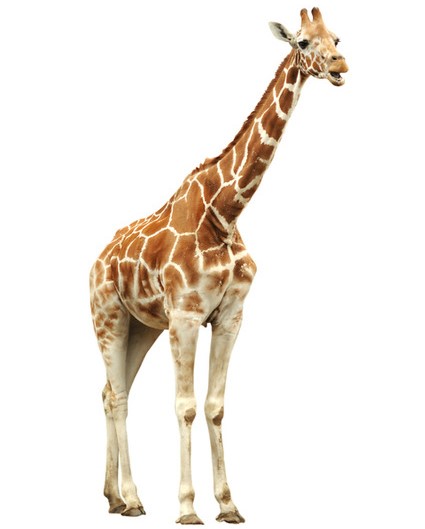
B. A 20 foot tall spotted horse with a 6 foot long neck and a 21 inch long tongue

I’m going to guess that most people would pick option A. Strangely enough, the laws of developmental biology forbids unicorns from existing, yet we take for granted the miracle that is a giraffe. With access to the internet, we’ve become so exposed to all types of creatures, that we’re numb to the marvels of the natural world. But go back a few thousand years and the description of a rhinoceros was probably just as awe inspiring as a dragon.
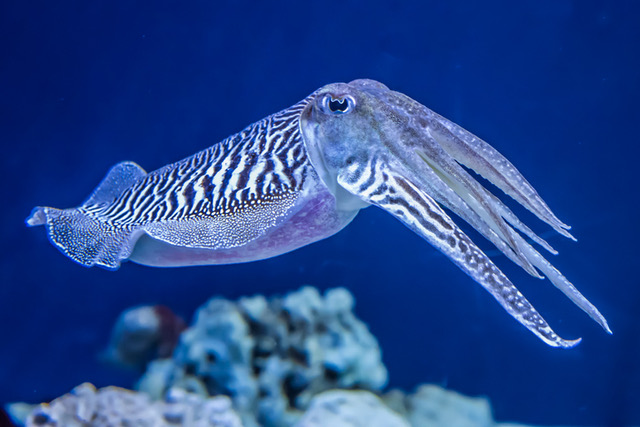
History is filled with examples of humans discovering creatures that they had never seen before, and many of the best documented accounts come from European explorations of other continents. Quotes from European explorers in the 1600s and 1700s can be found describing a variety of creatures for the first time in their language, including penguins, bison, and crocodiles. My favorite description, however, is John Fryer’s discovery of my own research organism, the cuttlefish. Upon seeing a cuttlefish for the first time, Fryer portrayed it as a “monstrous figure… all one Lump with the Head, without scales; it was endowed with large Eyes, and had long shreds of Gorgon’s Hair, hung in the manner of Snakes, bestuck with snail-like Shells reaching over the body; under these appeared a Parrot’s Beak, two Slits between the Neck are made instead of Gills for Respiration.” (Fryer 1698) The way that Fryer describes the cuttlefish with elements of other animals reminds me of the ancient Greek myth of the chimera, a monster with the head of a lion, the body of a goat, and a snake for a tail. I think that Fryer’s account perfectly reported how truly strange the form of a cuttlefish is.


I research Cephalopods (octopus, squid, and relatives) because I think that they are some of the most fascinating monsters that the world has to offer. There are so many stories to be discovered from these ancient, aquatic invertebrates. They’ve evolved suckered arms and tentacles, camera-like eyes, the ability to change color and texture, jet propulsion, and advanced intelligence, yet they descended from the same common ancestor as slugs and snails. The alien-like nature of Cephalopods inspired the incomprehensible horrors of H.P. Lovecraft and the brain-eating Illithids of Gary Gygax. For me, the opportunity to study such incredible creatures is like living out a childhood dream.
Myths and stories make it clear that humans have always been captivated by monsters. The diverse array of concepts for fantastic creatures in folklore bring new meaning to Darwin’s idea of “endless forms most beautiful”. (Darwin 2004) Many of these stories go about explaining the origin of certain animals, like how a turtle got its shell. In essence, that is the same job as a developmental biologist. I look at animals and ask “How did this happen?” Whereas Aesop of ancient Greece might explain a turtle shell by saying the Greek god Hermes cursed it to carry its home everywhere it goes, Dr. Scott Gilbert of Swarthmore College would say the turtle’s shoulders moved inside its rib cage during development (Gilbert 2001). I would argue that both explanations are equally interesting.
When most people think of developmental biology, I would guess they picture a scientist hunched over a microscope, performing lonely and tedious work. This image makes me sad, because it takes the story out of the research. The story isn’t the fact that “snakes are missing a 17 base pair section of the ETS1 transcription factor.” (Kvon et al 2016) The story is answering the question of “how snakes lost their limbs.” The fun of developmental biology is in discovering answers to these types of questions.
My experience as a developmental biologist has helped me see all organisms through a different lens, but you don’t have to be a biologist to appreciate the creatures living in the world around you. All you have to do is ask questions. Next time you see Spanish moss hanging from a tree, ask yourself how a plant can live without roots or leaves. Or when you see an armadillo on the side of the road, ask yourself how a mammal got an armored shell. All it takes is a little extra thought, and you too can live in a world full of monsters.

Works cited:
– Darwin, Charles. The Origin of Species. Barnes & Noble Classics, 2004.
– Fryer, John. “A New Account of East-India and Persia, in Eight Letters Being Nine Years Travels Begun 1672 and Finished 1681.” R.R. for Ri. Chiswell, 1698.
– Gilbert, Scott F., et al. “Morphogenesis of the Turtle Shell: the Development of a Novel Structure in Tetrapod Evolution.” Evolution and Development, vol. 3, no. 2, 2001, pp. 47–58., doi:10.1046/j.1525-142x.2001.003002047.x.
– Kvon, Evgeny Z., et al. “Progressive Loss of Function in a Limb Enhancer During Snake Evolution.” Cell, 2016. doi:10.1016/j.cell.2016.09.028.