Unicorns Are Impossible and Also Boring

Unicorns have appeared in the myths and legends of numerous ancient cultures. Nowadays they are a universally recognized creature that has become synonymous with rarity. So it seems strange that despite being so widespread, and ultimately being such a simple concept, that unicorns don’t exist. After all, it’s just a horse with a horn. But in reality, the rules of evolution and development forbid unicorns from existing.

17th century woodcut of a unicorn. Image source: University of Houston Libraries

The first issue is a very simple matter of natural selection. Horses typically eat by grazing, and an animal that needs to frequently lower its head to the ground would certainly be inconvenienced by a giant spike on its forehead. The horn would be getting stuck in the ground all the time. Usually ornamental features like this don’t provide much of an advantage except in rare instances for attracting mates, and traits whose costs outweigh their benefits typically aren’t favored by evolution. There are not many circumstances where a horn would be beneficial to a horse’s lifestyle, so such an adaptation like this wouldn’t stick around.

But even if natural selection failed, there are still physical, developmental constraints preventing horses from growing horns. The next rule that unicorns break is the developmental rule of bilateral symmetry. Almost every animal develops their body in such a way that it is perfectly symmetrical along one axis. Sometimes there are exceptions to this where a structure is built on only one side, like the way certain snails’ shells coil or the human heart favoring the left side of the body, but there are never any circumstances where a structure is built directly on the midline, like a unicorn’s horn. At this point many people are probably trying to think of exceptions. One that often comes to mind with unicorns is the narwhal. They are commonly referred to as “the unicorns of the sea.” But narwhal “horns” aren’t horns at all, and are in fact a modified tooth protruding from one side of the face, which is much more apparent looking at a narwhal’s skull. This approach of elongating a tooth probably wouldn’t look as elegant on a horse.
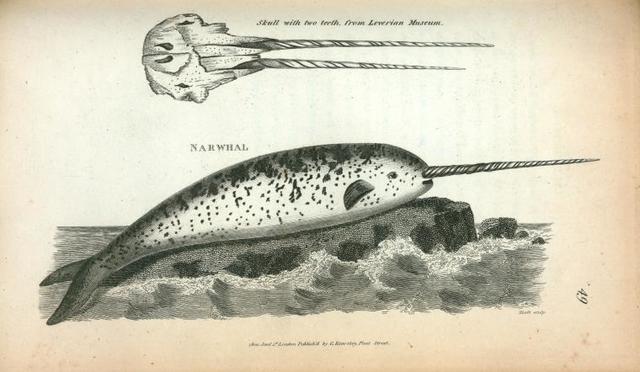
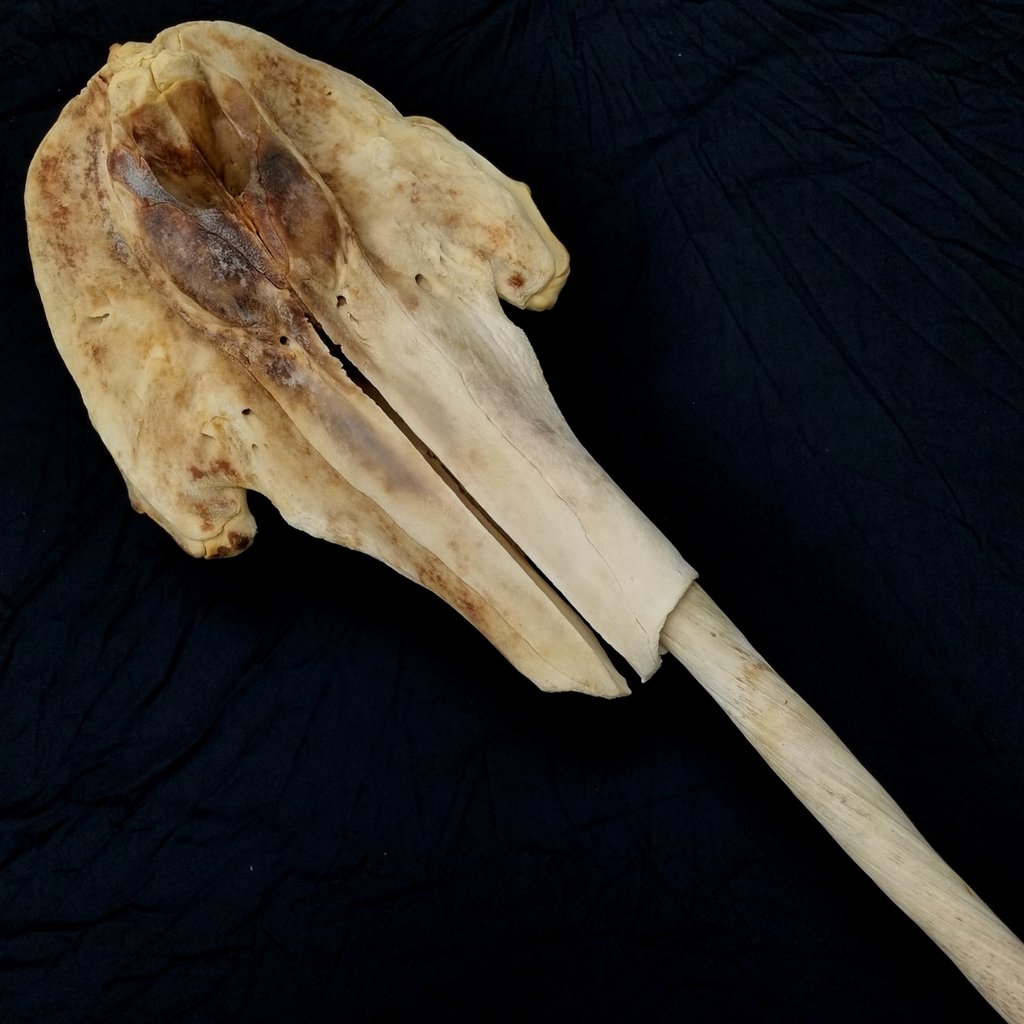
The nose is another structure that seems to be an exception at first glance. Just looking in a mirror, you can tell that it’s directly in the middle of the face. In reality, though, the nose is actually the result of two symmetrical structures on either side of the face coming together and fusing on the midline. This method works for the nose because of the way bones are situated around the front of the face, but the same concept couldn’t be transferred up to the forehead.

So clearly unicorns aren’t meant to exist in nature. But what about mad science? Could we artificially create a unicorn? Maybe. There’s a chemical called bone morphogenic protein, or BMP, that causes bones to develop in embryos. Studies show that applying this protein can cause bone to form in places where it otherwise wouldn’t. So maybe we could use BMP to make a unicorn horn. But this is a bad idea for a few reasons. 

First of all, ethics. I think it goes without saying that this would be horribly inhumane and the animal would probably not enjoy it.

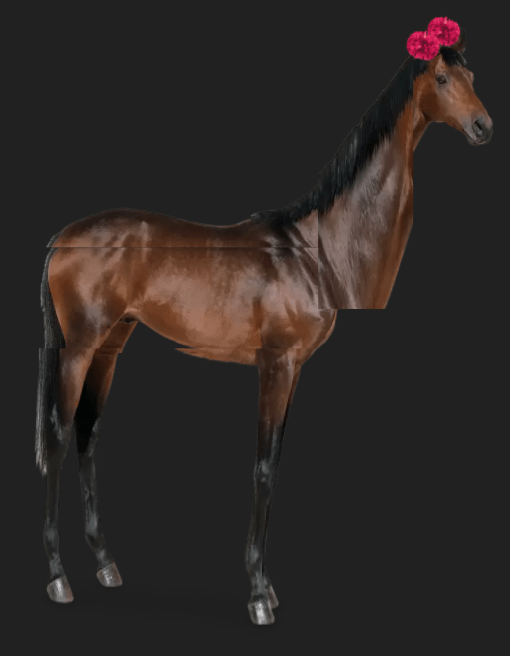
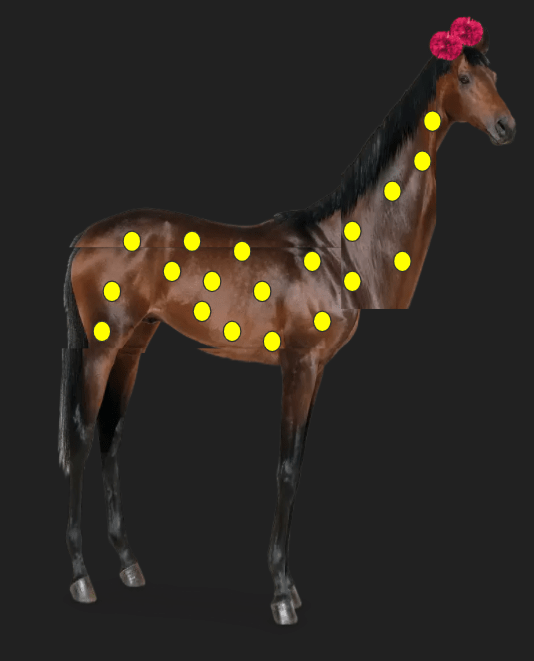
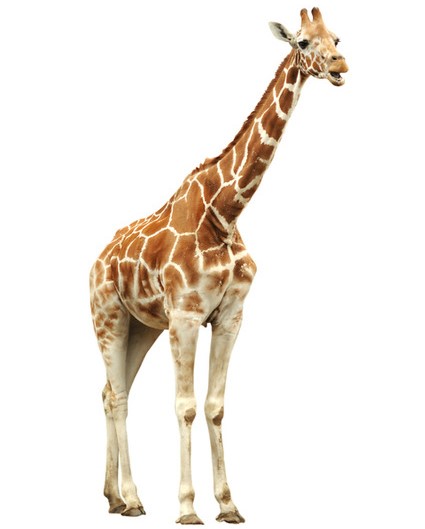
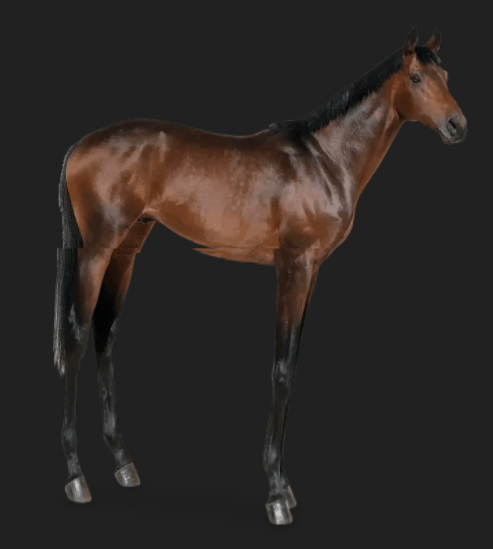
But second of all, and this one might be controversial, unicorns aren’t special. I think that the idea of using a unicorn as the poster child for uniqueness is an absolute injustice. The concept of a horse with a horn is so unbelievably boring and uninspired, especially when there are so many other better options in real life. In contrast, take a horse, put it on stilts, quadruple the length of its neck, attach some pom-poms to its head, and just for fun, paint it with polka dots. What I just described is absolutely insane. If I said any of that out of context you’d think I was a madman, but this thing exists! It’s just a giraffe. And honestly, I tried my best to make my version look bizarre, but the real giraffe is still far stranger. Yet if I showed you a picture of a giraffe right from the beginning, you probably wouldn’t have thought twice about it. My big point here is that when we go searching for unicorns, we end up ignoring the truly remarkable monsters that already live in our world.
An Introduction to Monster Biology

Officially, I study the evolution of development (evo-devo for short). Personally, I would rather consider myself a monster biologist. A standard reaction to a statement like that would be something like “But monsters aren’t real! How could you research something that doesn’t exist?” And my response to that would be “Of course monsters are real! You see them every day!” To prove this point, I’ll propose a thought experiment. Which of the following seems more plausible:

A. A horse with a horn or
B. A 20 foot tall spotted horse with a 6 foot long neck and a 21 inch long tongue

I’m going to guess that most people would pick option A. Strangely enough, the laws of developmental biology forbids unicorns from existing, yet we take for granted the miracle that is a giraffe. With access to the internet, we’ve become so exposed to all types of creatures, that we’re numb to the marvels of the natural world. But go back a few thousand years and the description of a rhinoceros was probably just as awe inspiring as a dragon.
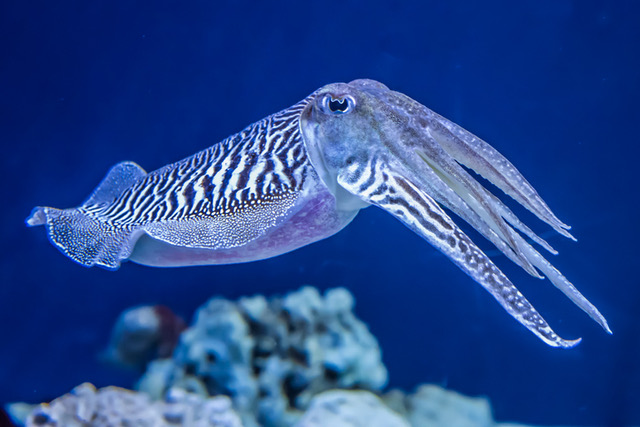
History is filled with examples of humans discovering creatures that they had never seen before, and many of the best documented accounts come from European explorations of other continents. Quotes from European explorers in the 1600s and 1700s can be found describing a variety of creatures for the first time in their language, including penguins, bison, and crocodiles. My favorite description, however, is John Fryer’s discovery of my own research organism, the cuttlefish. Upon seeing a cuttlefish for the first time, Fryer portrayed it as a “monstrous figure… all one Lump with the Head, without scales; it was endowed with large Eyes, and had long shreds of Gorgon’s Hair, hung in the manner of Snakes, bestuck with snail-like Shells reaching over the body; under these appeared a Parrot’s Beak, two Slits between the Neck are made instead of Gills for Respiration.” (Fryer 1698) The way that Fryer describes the cuttlefish with elements of other animals reminds me of the ancient Greek myth of the chimera, a monster with the head of a lion, the body of a goat, and a snake for a tail. I think that Fryer’s account perfectly reported how truly strange the form of a cuttlefish is.


I research Cephalopods (octopus, squid, and relatives) because I think that they are some of the most fascinating monsters that the world has to offer. There are so many stories to be discovered from these ancient, aquatic invertebrates. They’ve evolved suckered arms and tentacles, camera-like eyes, the ability to change color and texture, jet propulsion, and advanced intelligence, yet they descended from the same common ancestor as slugs and snails. The alien-like nature of Cephalopods inspired the incomprehensible horrors of H.P. Lovecraft and the brain-eating Illithids of Gary Gygax. For me, the opportunity to study such incredible creatures is like living out a childhood dream.
Myths and stories make it clear that humans have always been captivated by monsters. The diverse array of concepts for fantastic creatures in folklore bring new meaning to Darwin’s idea of “endless forms most beautiful”. (Darwin 2004) Many of these stories go about explaining the origin of certain animals, like how a turtle got its shell. In essence, that is the same job as a developmental biologist. I look at animals and ask “How did this happen?” Whereas Aesop of ancient Greece might explain a turtle shell by saying the Greek god Hermes cursed it to carry its home everywhere it goes, Dr. Scott Gilbert of Swarthmore College would say the turtle’s shoulders moved inside its rib cage during development (Gilbert 2001). I would argue that both explanations are equally interesting.
When most people think of developmental biology, I would guess they picture a scientist hunched over a microscope, performing lonely and tedious work. This image makes me sad, because it takes the story out of the research. The story isn’t the fact that “snakes are missing a 17 base pair section of the ETS1 transcription factor.” (Kvon et al 2016) The story is answering the question of “how snakes lost their limbs.” The fun of developmental biology is in discovering answers to these types of questions.
My experience as a developmental biologist has helped me see all organisms through a different lens, but you don’t have to be a biologist to appreciate the creatures living in the world around you. All you have to do is ask questions. Next time you see Spanish moss hanging from a tree, ask yourself how a plant can live without roots or leaves. Or when you see an armadillo on the side of the road, ask yourself how a mammal got an armored shell. All it takes is a little extra thought, and you too can live in a world full of monsters.

Works cited:
– Darwin, Charles. The Origin of Species. Barnes & Noble Classics, 2004.
– Fryer, John. “A New Account of East-India and Persia, in Eight Letters Being Nine Years Travels Begun 1672 and Finished 1681.” R.R. for Ri. Chiswell, 1698.
– Gilbert, Scott F., et al. “Morphogenesis of the Turtle Shell: the Development of a Novel Structure in Tetrapod Evolution.” Evolution and Development, vol. 3, no. 2, 2001, pp. 47–58., doi:10.1046/j.1525-142x.2001.003002047.x.
– Kvon, Evgeny Z., et al. “Progressive Loss of Function in a Limb Enhancer During Snake Evolution.” Cell, 2016. doi:10.1016/j.cell.2016.09.028.