

Dragons have fascinated humans since stories have been told and written records have been kept. What about dragons fascinates us so much? Is it the impossibility of them? Or could it be the possibility of them? After all, dragons have been found in almost every culture; from China to Mesoamerica. I too have been bitten by the dragon bug. Together, let’s dive into the lore and possible science of dragons and other monsters from mythology. In this ongoing series I will discuss and rate the realism of dragons in mythology and pop culture.
Dragons aren’t real (spoiler alert), so we’re going to have to establish some ground rules. First, if a trait has never evolved in real life, then we can assume that it wouldn’t be able to evolve in a realistic dragon. Second, we will also assume that dragons are large predators (unless otherwise explicitly stated in their stories), so traits that are beneficial to large predators in real life will be considered more realistic. Third, because dragons are generally scaled and often compared to lizards, we will assume that they are some kind of reptile. This means that we will treat traits that are commonly found in reptiles as a more realistic feature of a dragon. Because we can’t place dragons in a precise group of reptiles, all options are on the table (squamates, turtles, crocodilians, dinosaurs, and even birds). The final rule is that any type of magic power will be disregarded in terms of realism. If we didn’t consider every dragon with fire breath or wingless flight, it would end up being a pretty boring list. So for now, we’re just going to pretend those powers don’t factor into our consideration. It should also be noted that I won’t be paying as close attention to biophysics. That’s not my area of expertise, and there are already some great resources out there looking into the realism of dragon physics. Now that we’ve got our rules in place, let’s begin.
Smaug (The Hobbit: The Desolation of Smaug):

Smaug is one of the most iconic dragons of all time. The original concept from The Hobbit book really set the precedent for the design of all other dragons in modern fiction. The animators for The Hobbit did Smaug justice with a very realistic design, both in terms of graphics quality and anatomy. The first detail that I noticed is that Smaug is accurately a tetrapod, meaning that he has four limbs. Every descendant of the first vertebrates to crawl on land has had four limbs (or fewer, but never more). So when dragons are depicted with four legs AND two wings, that’s a big inaccuracy. I was happy to see that the designers of Smaug combined his forelimbs and wings together into one structure, much like a bird or a bat. This is consistent with how we know wings can develop in other vertebrates in real life.
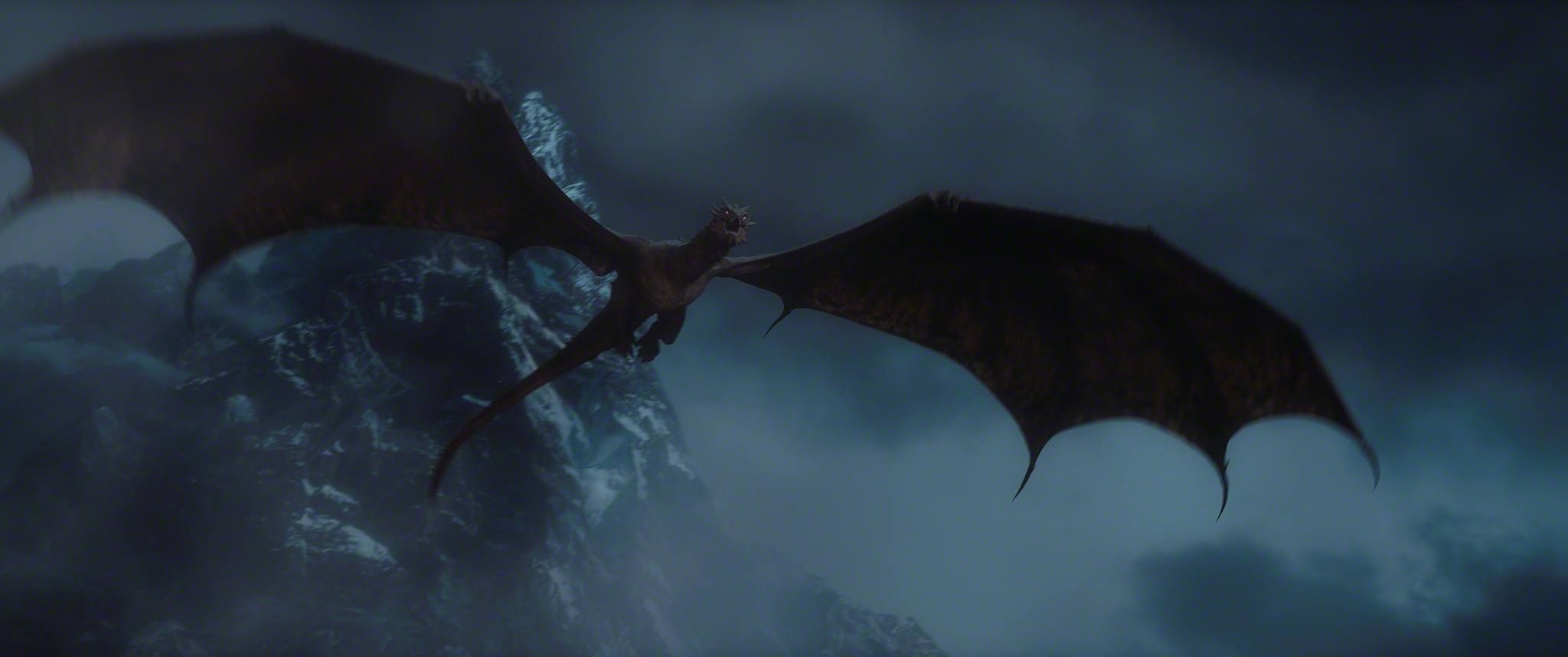
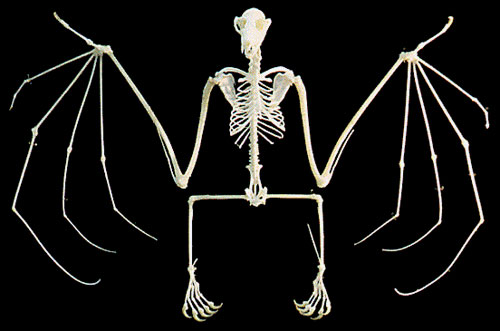
At first, I was going to take off some points for the wing skin not connecting to anything, but upon closer inspection I realized that the wing skeleton was supported by elongation of three of Smaug’s fingers. This is very similar to how a bat wing is structured, which is a cool detail. However, Smaug’s wing fingers bend above the arm, whereas a bat’s wing fingers bend below the arm. In a bat, this allows the fingers to connect all the way to the leg area, decreasing land mobility but improving flight. Without the skin connecting to the leg, Smaug can walk much easier but his wings probably wouldn’t be strong enough for flight.

Additionally, the designers of Smaug consistently used primarily crocodilian features. When Smaug walks, he pushes himself off the ground with his legs underneath him. This is similar to how crocodiles and alligators walk, rather than how lizards move with their hindlimbs pushing more sideways against the ground. Smaug’s head also has a very crocodilian shape, which was confirmed to be the animators’ intentions in a behind the scenes video. My only complaint with the head is that there seems to be a bit too much tooth specialization. Most animals, with the exception of mammals, only have one kind of teeth. This is specifically true of crocodilians, which have a tooth type called thecodont teeth. In the movie, however, Smaug seems to have some specialized teeth at the front of his mouth that are reminiscent of snake fangs.
As a whole, Smaug is a pretty realistic dragon. Clearly a lot of work went into his design. There are only a few minor details that break the illusion, and they would only be noticed by a trained eye.


 Monster Biology